
Trace Former Menominee Property Owners
Start with the parcel's most recent recorded deed. That deed names the grantor and grantee and describes the land that changed hands. Take the grantee's name as your next search term. Then work backward deed by deed, checking each legal description against the parcel. Menominee County's vault tract index is described as reaching from first federal acquisition to present. The online index cutoff, though, is not stated, and neither are the exact historical volumes.
| Source | Years It Covers | Where Held | What It Shows |
|---|---|---|---|
| ROD tract index / deed books | First federal acquisition to present in concept; online cutoff not located | Register of Deeds vault and LandShark | Recorded transfers and parcel chain |
| County vital registration | Menominee courthouse holdings begin in 1961 | County ROD / Wisconsin DHS | Supporting identity and event leads |
| Wisconsin historical indexes | Pre-October 1907 index collections; local dates vary | Wisconsin Historical Society | Context and leads for earlier jurisdictions |
| Plat and survey records | Complete local year range not located | Register of Deeds / Land Information Office | Subdivision, lot, and legal-description context |
Start at the county's current tract. If the online trail stops, request older deed books, grantor-grantee books, plat references, surveys, and microfilm. A historical catalog adds context. It never substitutes for a recorded conveyance. Because the county's known archive ranges are incomplete, ask the custodian about a gap instead of guessing a year.
Menominee's Tract Index Starts Before 1961
The Register of Deedes describes a parcel history running from the first U.S. government acquisition to today. For an older transfer that a name-only index hides, that tract search is the strongest local route. It also pays off when the same land shows up under a trust, an estate, a company, a couple, or an alternate spelling. LandShark offers internet access, though the online start year is not published. Older tract and grantor-grantee references may sit in the office vault. Call 715-799-3312 with the PIN, legal description, party names, instrument type, and date range, and ask which books or images cover your period before treating an online result as a complete chain. The Menominee LandShark portal is the web route into the deed index.
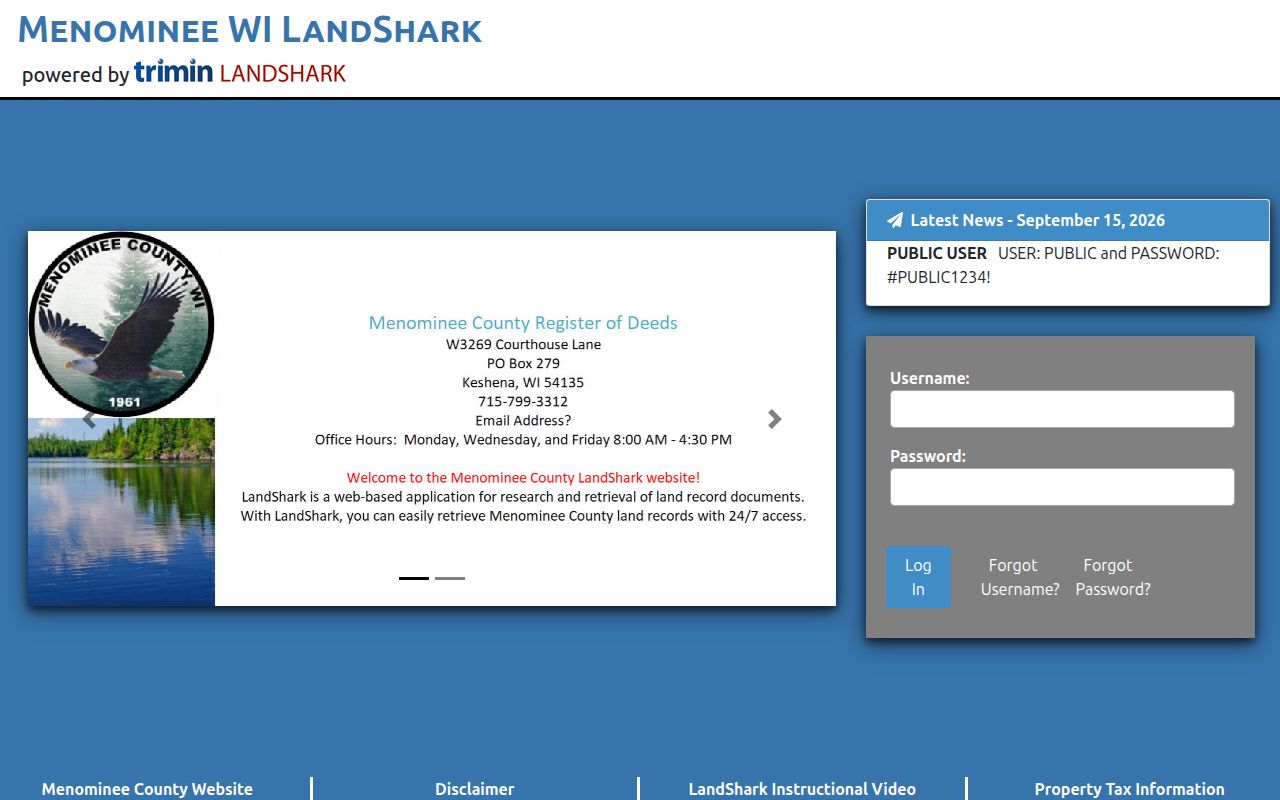
Viewing or printing an online instrument takes paid service, so record the reference before requesting a copy.
Walk the Menominee Deed Chain Backward
A former-owner search reads transfers in reverse. The grantee received the interest; the grantor conveyed it. Log every instrument in date order. Check its legal description before moving to the prior name. Expect the chain to stop or branch once an estate, trust, parcel split, or partial conveyance appears.
- Find the newest deed naming the present holder as grantee.
- Write down its grantor, date, legal description, type, and document reference.
- Search the grantor as an earlier grantee and compare the legal description.
- Repeat until LandShark stops or the name trail no longer matches the parcel.
- Ask the Register of Deeds for tract books, deed books, or microfilm for older references.
- Grantor and grantee
- The parties conveying and receiving an interest.
- Chain of title
- The sequence of recorded transfers for the land.
- Reverse search
- Moving from a newer grantee to the grantor's earlier acquisition.
- Legal description
- The written land description, often stronger than an old street address.
Menominee Tract Index Predates County
Menominee County was formed between 1959 and 1961 from the former Menominee Indian Reservation. The courthouse guide lists births, deaths, and marriages starting in 1961. Those dates mark county administration, not the start of ownership or the earliest deed. A parcel chain can reach back into older federal or reservation-era records. The county is so new. The Wisconsin Historical Society notes that no standard county history was ever written. Its county catalog still helps place older names and records in context. Search by the land's place and jurisdiction. Then return to the current PIN and tract index for the recorded transfer sequence. Use the Historical Society county catalog for that context.
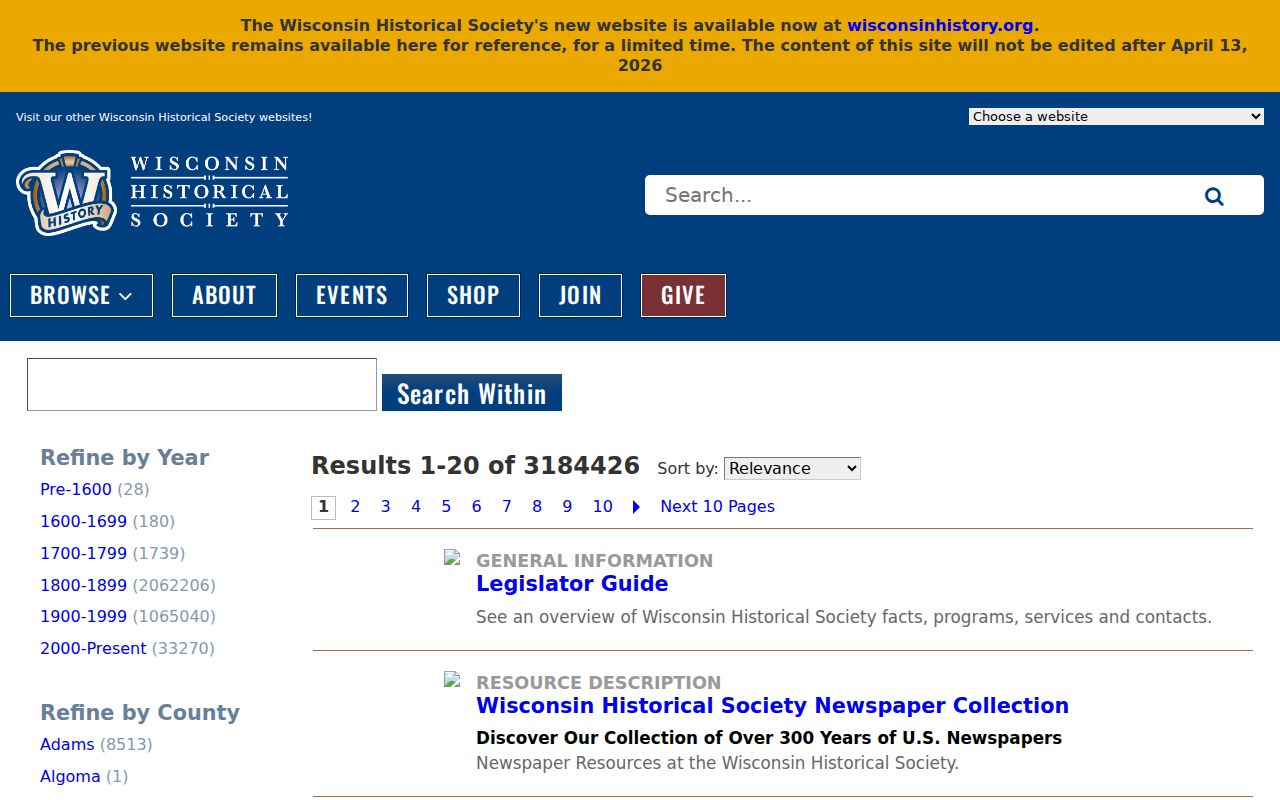
The catalog offers historical leads; the Register of Deeds holds the parcel conveyance trail.
Menominee Vital Records Start in 1961
A death, marriage, or birth record can explain a name change. It can also explain an estate tied to an older transfer. Wisconsin DHS lists Menominee County registration beginning in 1961 for all three event types. Anything earlier may sit under a parent county or a reservation-era system. Never assume the present county label for an older event. DHS separates historical searches from certified copies. Access to recent certificates depends on the record type, eligibility, and identity documents. Mail and VitalChek are the state ordering routes, and VitalChek adds a service fee. The Wisconsin Historical Society's pre-1907 indexes can offer a lead. But they do not replace an official certified copy. The DHS genealogy table lists in-person research ranges, and the application page provides the forms.
Treat any research index as a lead only. Order the official record from the proper custodian. For a certified copy, use the specific Wisconsin Vital Records application and follow its eligibility and identity instructions.
The form's own instructions control which certified-copy option fits the event and date.
Menominee Probate Can Break the Name Chain
After a death, land can pass through a personal representative's deed. It can also pass through a transfer-on-death deed, an affidavit, or another recorded instrument. The death certificate supports the event. It does not change title. WCCA may show the probate case, while LandShark holds the parcel instrument. Compare the court order or representative authority against the deed that identifies the land. Public case information is a lead, not the complete court file. The Circuit Court Clerk can explain archived dockets plus copy and certification terms. The probate record and the deed may use different names. If so, record both and ask the custodian how the parcel was indexed. The current holder and the chain are separate questions. The Menominee current-owner record covers the present roll before the backward search begins.
Menominee Parcel Changes Break Name Searches
Parcels in Menominee County rarely stay still on paper. A survey, certified survey map, subdivision plat, split, merger, or correction. Any of these can redraw a parcel's boundaries. The modern parcel number may not line up with every earlier deed. Fire numbers and road names shift too. Historic descriptions often read like a different place.
When the name trail gets murky, switch tactics. Search the legal description instead. You can also use section and government-lot terms, lot and block, or a lake reference. Two offices matter here. The Land Information Office handles mapping and rural-address context. The Register of Deeds holds the recorded instruments, such as deeds and plat records. The roles meet at the parcel, but they are not interchangeable. Keep a timeline of old and current descriptions. Ask the office to trace the tract through each change.
How Far Menominee Ownership Records Reach
How far back can Menominee County ownership records go? The Register of Deedes describes the tract index as reaching from the first U.S. acquisition to the present. That is the conceptual reach of the vault index. It is not a promise that every early image sits online. LandShark's first year, its imaging cutover, and its exact online coverage are not published figures. Treat a chain of title as incomplete. Do so until the office confirms which older deed books it covers.
Older records may live elsewhere. The Wisconsin Historical Society holds pre-1907 indexes and a county catalog. DHS describes historical vital access. Events from early eras can also sit under other jurisdiction names. The land's federal, reservation, and county history may pull from more than one archive. Through it all, the parcel tract remains the common thread.
Lawful use. Former-owner research supports property history, estate questions, and due diligence. Do not use a historic deed chain to track, threaten, or harass any living person.