
Menominee Deed Records and Instruments
The Register of Deeds is where Menominee County keeps its legal record of deeds, mortgages, tax liens, sheriff's deeds, and UCC filings. A deed records a conveyance. A mortgage records a security interest instead. Its later release stands as a separate instrument. The county's public description confirms these categories, though the online LandShark dropdown does not render every document label on one screen.
| Deed Type | What It Does | Common Use |
|---|---|---|
| Deed | Records a transfer from grantor to grantee | Trace ownership and the stated legal description |
| Mortgage | Records a secured loan interest | Review an encumbrance filed against land |
| Mortgage release | Records satisfaction or discharge of a mortgage | Match it to the earlier mortgage |
| Tax lien | Records a tax claim affecting property | Check beside Treasurer tax status |
| Sheriff's deed | Records a conveyance after a judicial sale | Confirm against the court case |
A grantor transfers an interest, and a grantee receives it. The index entry is only a reference, not the full legal effect of an instrument. Record the document number, date, parties, type, book and page or image reference, and legal description. Then inspect the actual record whenever its terms matter.
Menominee Tract Index Follows the Land
Menominee County describes its vault tract index as starting with the first transfer from the United States. It goes to a settler or buyer. From there it runs through recorded deeds and mortgages to the present. A tract index helps when a name search misses the parcel. The deed may be indexed to a trust, an estate, a company, or a couple. It may also use a variant spelling rather than the name you expected.
Pull the PIN and legal description from Ascent first. Then ask the Register of Deeds about a tract-index search. It can pin down the instrument reference. LandShark's public description confirms internet access, but it does not state an exact online cutoff, result cap, or full list of document-type fields. When a web search stops short, the vault remains the essential fallback.
The LandShark entry page is the online route to the recorded-land service.
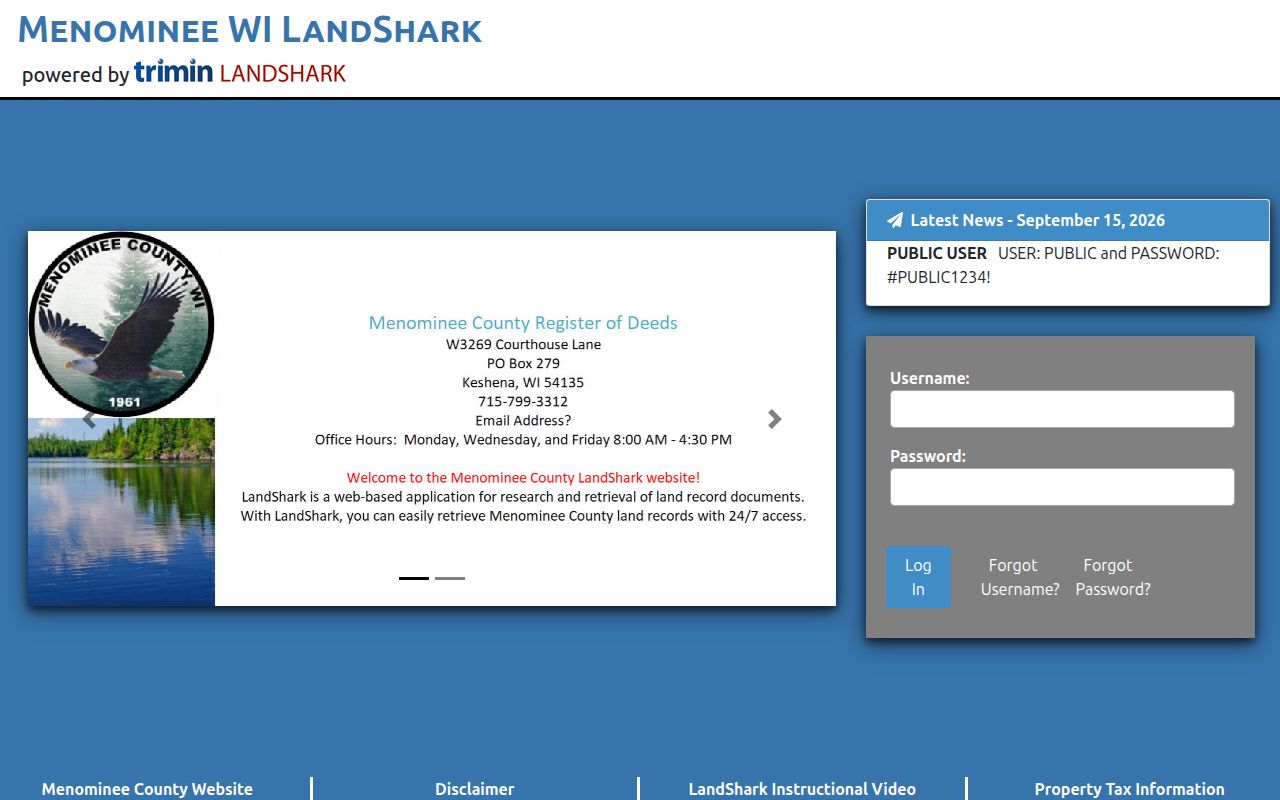
Note: The LandShark entry page opens the county's recorded-land service, and subscription terms apply to viewing or printing records online.
Read Menominee Deed Records by Parties
The grantor conveys the interest; the grantee takes it. To work backward, find the newest deed where the apparent current owner appears as grantee. The grantor on that instrument points to the prior acquisition. A legal description can rescue a name-search miss. It also separates two Menominee County property owners. Those owners may share a similar name.
- Locate the parcel in Ascent and copy its PIN, owner spelling, and legal description.
- Search that owner as grantee in LandShark and note each likely deed reference.
- Read the deed to identify its grantor, legal description, and recording details.
- Search the grantor as an earlier grantee, then repeat until the index ends.
- Ask the Register of Deeds about tract books or older volumes when online coverage is unclear.
- Grantor
- The party named as conveying an interest in the instrument.
- Grantee
- The party named as receiving the conveyed interest.
- Chain of title
- The sequence of recorded transfers tied to a parcel.
- Book/page or document number
- A locator the office uses to retrieve an instrument or image.
Keep a separate row for every instrument. One parcel's chain can mix a deed, mortgage, assignment, release, lien, and later conveyance. Two entries may name the same parties. Save the recording date and instrument type for each. A trust or estate may appear. Preserve that exact name rather than substituting an assumed individual. The county publishes no LandShark online cutoff or exact image fee. A missing result therefore never proves an older filing is absent. A name query may fail while the parcel description is known. In that case, ask staff for a tract search.
Menominee Mortgages Need a Release
A recorded mortgage and a deed are not interchangeable. A mortgage creates an encumbrance. Its satisfaction, release, assignment, or discharge is a separate record. That record should be matched to it. The Menominee County Register of Deeds holds mortgages, tax liens, sheriff's deeds, and UCCs among its deed records. A tax bill shows an unpaid amount. But a recorded tax lien or foreclosure instrument belongs in the land-record and court trail.
Search both the parties and the parcel description. If an assignment changed the lender's name, follow the assignee. Do that before concluding a release is missing. Easements and restrictions can also stay with land after a sale. A later transfer alone never erases a recorded restriction.
Menominee Legal Descriptions Beat Addresses
Older deeds may not use today's fire number or road spelling. The instrument may instead describe a government lot. It may also cite a fractional section, lake frontage, lot and block, or metes and bounds. A PIN links the modern tax parcel to a map. The legal description links the instrument to the land itself. Keep both handy when asking staff to find an older filing.
A split, merger, survey, certified survey map, or subdivision may have reshaped a parcel. The current PIN may not be the only useful key. Ask the Land Information Office for mapping context. Ask the Register of Deeds for the recorded survey or plat. The public materials give no complete local plat-year run. Do not assume a particular book or cutoff.
Menominee Court Cases Explain Deeds
A lis pendens is a warning, not a transfer. It tells you that litigation may cloud title to a parcel. Find the case through WCCA first. Then line the docket up with the LandShark record for the same property. Note the county, case number, caption, case type, and filing date. Note the status, disposition, and any link to a public document. A foreclosure docket deserves extra care. Check it against a later judgment, a sale confirmation, or a sheriff's deed. Do this before assuming anything about who holds title now.
WCCA works statewide, and every county courthouse offers public terminals for the same purpose. Older dockets and certified judgments go through the clerk of circuit court. Federal matters sit in PACER, which charges per-page fees and requires an account. One caution applies. A party listing on a docket only proves a filing happened. It says nothing about anyone's conduct. Start with Wisconsin Circuit Court Access, the state's public case search.
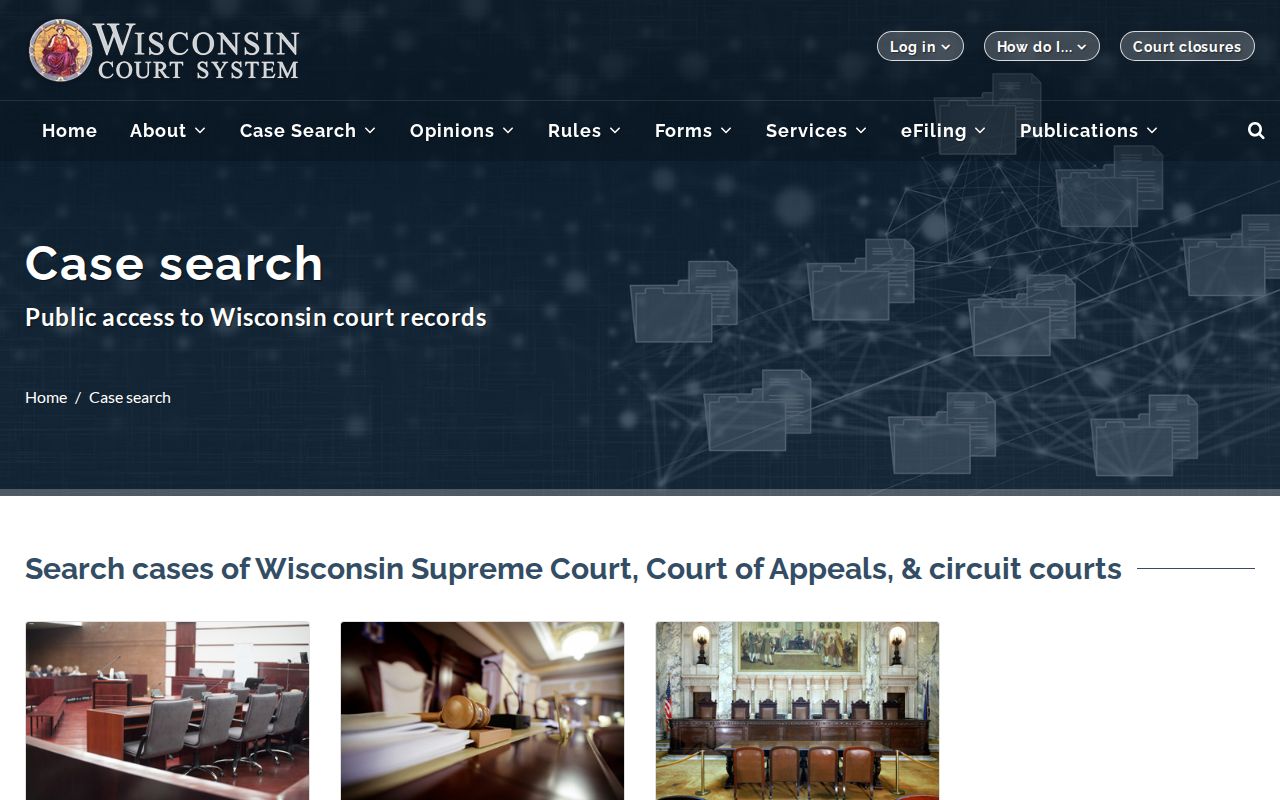
Treat a docket as a lead, nothing more. When a court document affects title, ask the clerk for a certified copy. Federal foreclosure or bankruptcy cases may live elsewhere, in PACER, depending on venue.
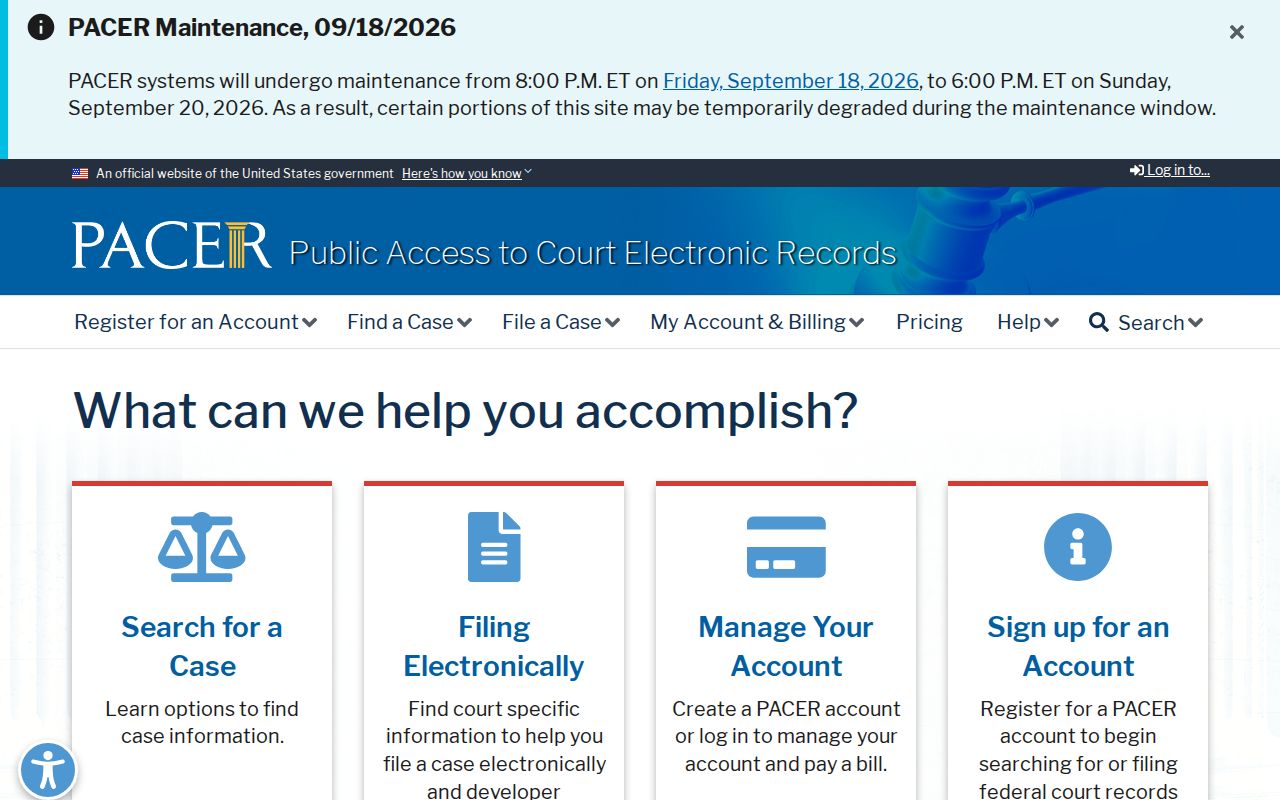
Match any federal docket to the Menominee County land record itself before concluding anything about a parcel.
Menominee Deed Records Cross County Lines
Menominee County took shape between 1959 and 1961, carved from the former Menominee Indian Reservation. Its deed history runs deeper than its borders, though. The Register of Deedes describes a tract index reaching back to first federal acquisition. A chain of title may pull in federal records, reservation-era material, or documents from a predecessor jurisdiction. The county's modern founding date is not a cutoff for its online indexes.
Historical collections help in a different way. The Wisconsin Historical Society's county catalog adds place and community context. Its Menominee County History entry explains why no standard county history was ever produced. Use those sources to surface likely names and places. Then return to the parcel's legal description. The county land-record custodian keeps the recorded chain of deeds. The Historical Society catalog is a starting point. It never stands in for the deed instrument itself.
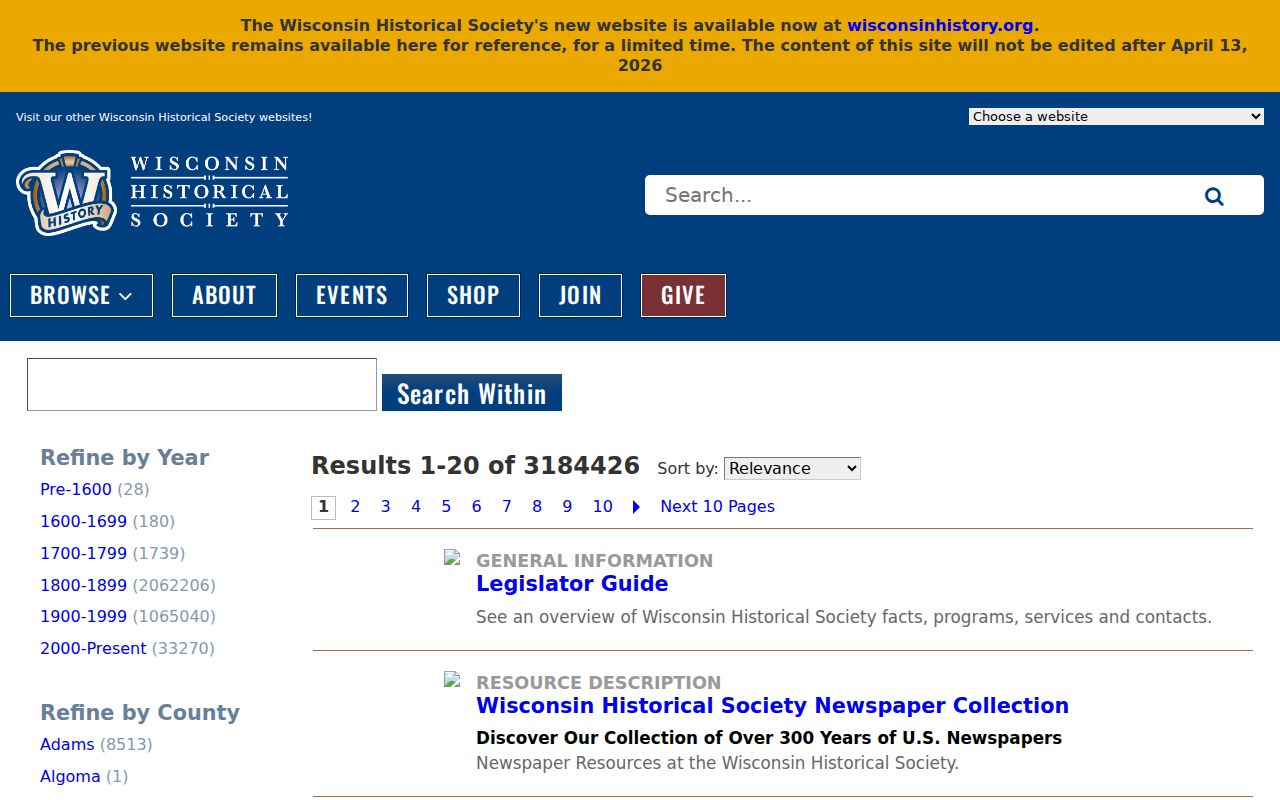
Historical context can explain a jurisdiction label on an old deed; the recorded instrument still governs what was actually filed in Menominee County.
Request a Menominee Deed Copy
Viewing or printing through LandShark takes a subscription or paid service. The Register of Deeds publishes no online price list for images or certified copies. Call 715-799-3312, or visit the courthouse address the county lists. Ask about inspection, ordinary copies, certification, and any staff search charge. Bring the PIN, grantor and grantee names, legal description, date span, and document reference if known.
What if the index stops short of the year you need? Ask whether the vault tract index, deed books, mortgage books, plat books, or microfilm can be searched in person. Call ahead, since the public pages state no firm archive schedule. Wisconsin Public Records Law, Wis. Stat. §§ 19.31-19.39, offers another route to existing records through the custodian. Describe the records you want. Do not ask staff to build an analysis for you.
For a narrow request, precision pays. Give the exact party names as written in the index. Give the approximate recording year, and any book, page, or document number already found. Quote trust, estate, or company names exactly, and list spelling variants as separate clues. Ask whether the office can hand you an instrument image, a plain copy, or a certified copy. Those are different deliverables. Keep the recording date apart from the signing date. Each date answers a different question about when a filing entered the public record.
Recorded, not guaranteed. A Menominee deed index shows a recorded reference, not every possible interest or a title opinion. Review the instrument and seek a title professional when clear ownership must be established.